
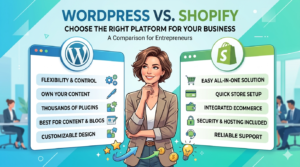
Choosing between WordPress vs Shopify is one of the most important website decisions for any modern business. Your choice will affect how fast you launch, how easy it is to manage content, and how smoothly your online store can grow over time. Because of this, understanding the real differences between WordPress vs Shopify is essential before you invest in design, development, or marketing.
At Work Dynamix, we build high-performing websites using WordPress, Shopify, React, Next.js, Node, and PHP for clients in the US, UK, Canada, Australia, UAE, and worldwide. In this guide, you will learn when WordPress vs Shopify makes sense, how each platform works, and which option is better for your business right now and in the future.
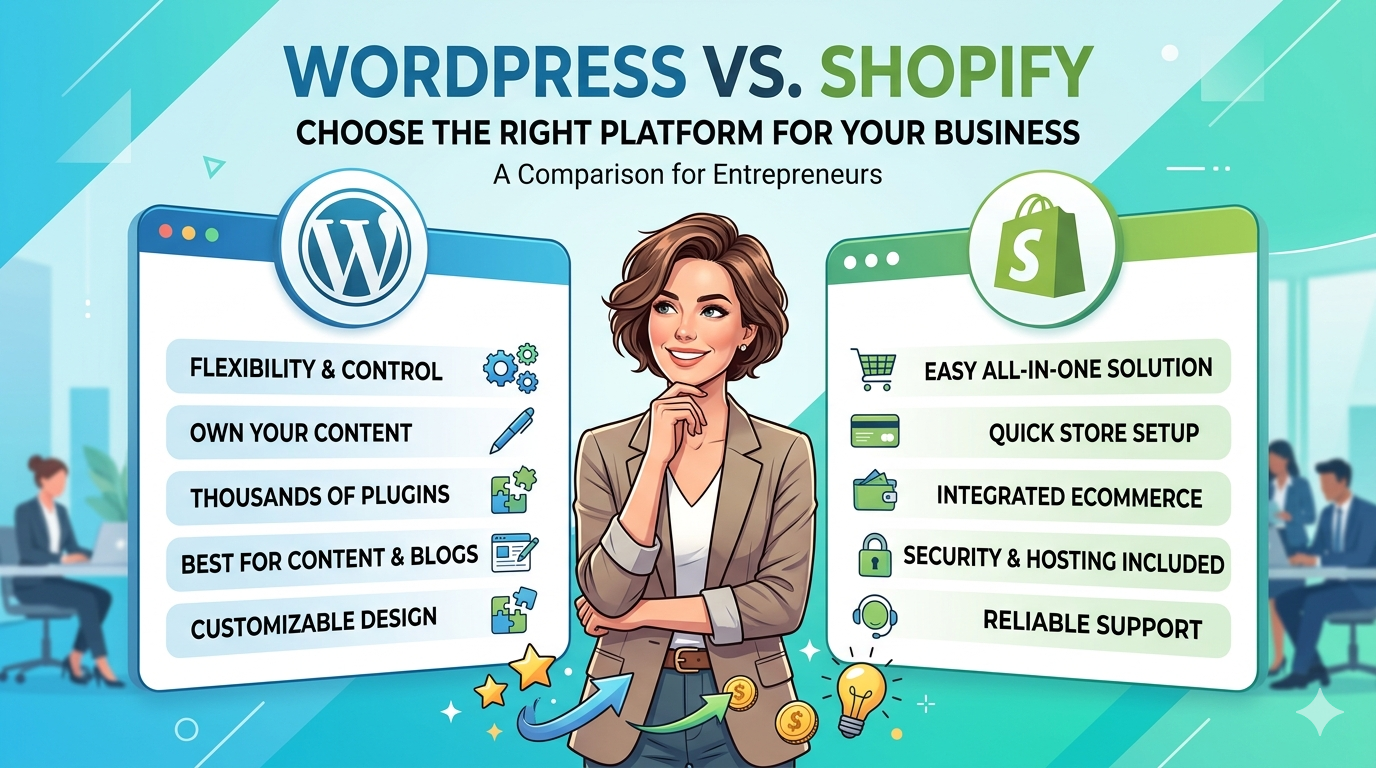 Every serious online business eventually asks the same question: WordPress vs Shopify?
WordPress vs Shopify: Quick Overview
Before you look at the details, it helps to understand where each platform is strongest. When you see the big picture, the WordPress vs Shopify decision becomes much easier.
- WordPress is a powerful, open-source content management system used for blogs, business websites, and online stores.
- Shopify is a hosted eCommerce platform designed primarily for selling products online with minimal technical overhead.
In other words, WordPress vs Shopify is usually a choice between maximum flexibility and maximum simplicity. To decide, you need to match the platform to your business model, your skills, and your growth plan.
External links for context:
Website Development Services – Work Dynamix
What Is WordPress?
WordPress is a free, open-source CMS that powers a massive share of the web. With the right setup, it can handle anything from a simple brochure site to a large content hub or a complex eCommerce store. When you compare WordPress vs Shopify, WordPress usually wins on flexibility and control.
Strengths of WordPress
First, WordPress is extremely flexible. You can build blogs, company sites, portfolios, membership platforms, and online stores on a single foundation. This flexibility makes WordPress ideal for businesses that expect their website to evolve over time.
Second, the plugin ecosystem is huge. You can add SEO tools, contact forms, learning management, booking systems, and more. For eCommerce, you can use WooCommerce to convert a WordPress site into a full online store.
Third, WordPress is excellent for content marketing and SEO. With the right plugins and smart internal linking, you have deep control over URLs, meta tags, schema, and site structure. As a result, WordPress vs Shopify often leans toward WordPress for content-heavy strategies.
Finally, WordPress gives you strong ownership. Because it is self-hosted, you choose your hosting provider and manage performance, backups, and security in the way that suits your business.
External reference:
Managed WordPress Hosting and Maintenance – Work Dynamix
Challenges of WordPress
Even though WordPress is powerful, it does come with responsibilities. For example, you need to set up hosting, install WordPress, choose a theme, and keep everything updated. If you do not have technical support, this can feel challenging.
In addition, security and performance require attention. When plugins and themes are not updated, vulnerabilities can appear. However, with a professional team managing updates and optimization, these risks are manageable.
Moreover, eCommerce is not built in by default. You rely on plugins like WooCommerce. This approach is flexible but requires configuration, UX design, and sometimes custom development to match your ideal buying journey.
Because of these points, WordPress vs Shopify is partly a question of whether you prefer control plus responsibility, or convenience plus limitations.
What Is Shopify?
Shopify is a hosted platform focused on one core goal: helping you sell products online as easily as possible. It bundles hosting, security, checkout, and store tools into a single subscription. When comparing WordPress vs Shopify, Shopify often wins for quick, low-friction eCommerce launches.
Strengths of Shopify
To begin with, Shopify is built for eCommerce from day one. Product management, inventory, discounts, and checkout flow are all included. You do not need to piece together multiple systems just to start selling.
Furthermore, Shopify is beginner-friendly. The interface is straightforward, themes are easy to customize, and you can handle most daily tasks without touching code. This is especially useful for solo founders or small teams.
On top of that, Shopify manages hosting and security. You do not need to worry about servers, SSL, or basic performance. As a result, you can focus more on marketing, ads, and product development instead of infrastructure.
Finally, the Shopify App Store offers many plug-and-play solutions. You can add upsells, subscriptions, reviews, loyalty programs, and email integrations in just a few clicks.
External reference:
Shopify Store Setup and Funnel Development – Work Dynamix
Limitations of Shopify
Despite its strengths, Shopify is not perfect for every scenario. When you compare WordPress vs Shopify for complex or content-heavy sites, Shopify can feel restrictive.
For instance, Shopify is less flexible for custom page types and unique layouts. You can extend it with custom themes and apps, but there are still platform limits you cannot change.
Additionally, your monthly expenses can increase over time. You pay for a base plan, may pay transaction fees, and often subscribe to several apps. These costs can be worth it for store simplicity, yet they must be part of your long-term calculations.
Finally, Shopify is a closed environment. You do not have full control over the server stack like you can with a custom WordPress or React/Next.js build. If you want very advanced functionality, this might become a bottleneck.
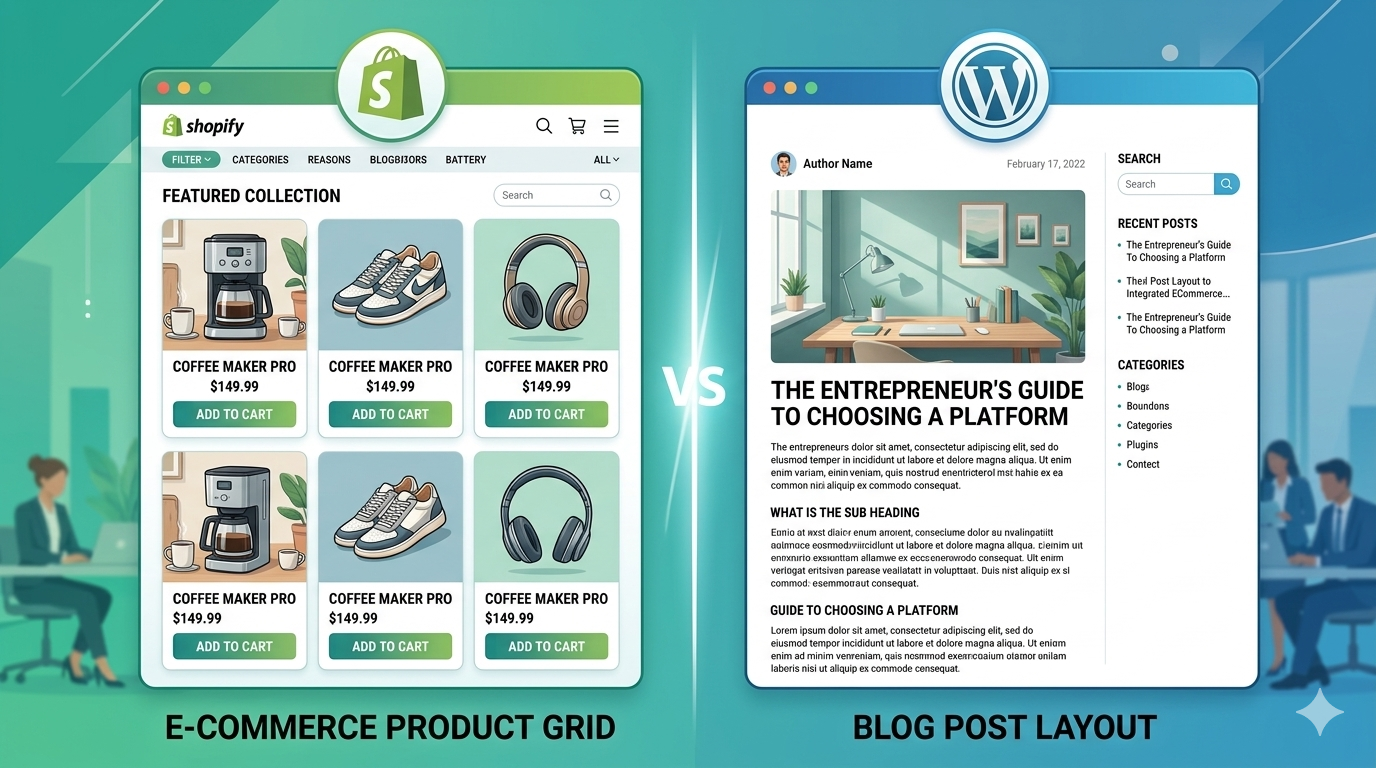 WordPress focuses on flexible content, while Shopify focuses on streamlined product sales.
WordPress vs Shopify: Key Factors to Compare
Now that you know the basics, let us compare WordPress vs Shopify on the factors that matter most for your website development. As you go through each section, think about how your business works today and how you want it to look in the next two to three years.
1. Ease of Use
When it comes to ease of use, Shopify usually feels simpler. The onboarding is guided, and core features are built in. If you want to start selling quickly, you can set up products and begin accepting payments with minimal friction.
WordPress requires more setup at the start. You must select hosting, install WordPress, configure themes, and add plugins. However, once everything is properly configured, editing pages and posts is straightforward through the dashboard.
Therefore, for non-technical teams that just want a store up fast, Shopify has an advantage. For teams willing to invest in proper setup for more power and flexibility later, WordPress is often better.
2. Flexibility and Customization
Flexibility is one of the biggest differences in the WordPress vs Shopify debate. WordPress, especially when combined with custom development using React, Next.js, Node, and PHP, is extremely adaptable. You can design unique layouts, build custom features, and integrate with many external systems.
Shopify, by contrast, is more structured. You can customize themes and add apps, yet some deep changes require workarounds or are simply not possible. For many standard stores, this is not a problem. For complex ideas, it can be a limitation.
As a result, if your website must do more than just sell products—for example, host learning content, handle custom user dashboards, or integrate advanced automation—WordPress usually wins on flexibility.
Internal link: [Custom Web Applications with React and Next.js – Work Dynamix]
3. SEO and Content Marketing
SEO is another crucial part of the WordPress vs Shopify decision. Both platforms can rank in search engines, but they support different strategies.
Shopify provides good basic SEO tools. You can edit titles, descriptions, URLs, and alt text. For many product pages, this is enough, especially when combined with a strong backlink strategy and optimized product content.
WordPress, with SEO plugins like Yoast SEO or Rank Math, allows much deeper control. You can manage structured data, sitemaps, advanced meta settings, and complex internal linking strategies. Because of this, WordPress is often chosen by businesses that rely heavily on content marketing.
Therefore, if long-term organic traffic from educational blogs, guides, and resources is central to your strategy, WordPress vs Shopify usually leans towards WordPress.
External reference:
Content-Driven Website Development – Work Dynamix
4. Costs and Long-Term Value
Cost is not only about your first month. When you compare WordPress vs Shopify, you must think about total cost of ownership.
Shopify uses a subscription model. You pay a monthly fee for the platform and may pay extra for apps and some transaction fees. The advantage is predictable, bundled costs and less technical overhead.
WordPress itself is free, but you pay for hosting, premium themes, and some plugins. You may also invest in professional development and ongoing maintenance. However, you often get more control and flexibility for the money you spend.
In many cases, Shopify is cost-effective for simple stores that value convenience. In contrast, WordPress often offers better long-term value for flexible, content-heavy, or custom websites.
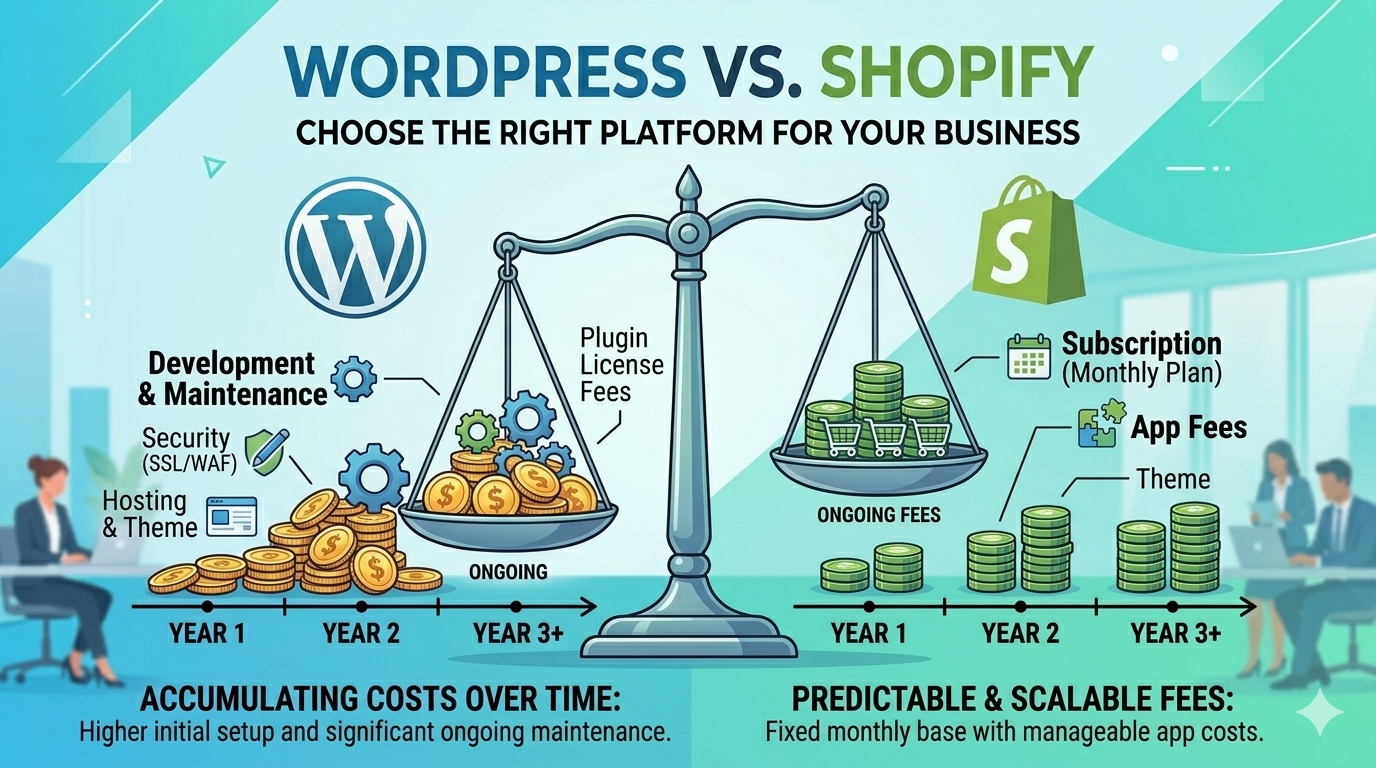 The real cost of WordPress vs Shopify includes hosting, apps, and ongoing development—not just the starting price.
5. Scalability and Growth
Scalability is another key factor in the WordPress vs Shopify discussion. Your website should grow with your business instead of holding it back.
Shopify scales well for product-based businesses following standard eCommerce patterns. As your traffic increases and you add more products, the platform handles the load, especially when you use Shopify’s own infrastructure correctly.
WordPress can also scale very effectively when it is designed well. With optimized hosting, caching, and clean code, it can support heavy traffic, large content libraries, and advanced integrations. A headless setup, where WordPress manages content and a React or Next.js frontend handles the user interface, can provide both speed and flexibility.
Because of this, if your future plans include custom tools, portals, or complex content structures, WordPress vs Shopify tends to favor WordPress for scalability with custom development.
Scaling Your Website with Modern Web Technologies – Work Dynamix
When WordPress vs Shopify Favors WordPress
You should strongly consider WordPress in the WordPress vs Shopify debate if:
- Content marketing and SEO are central to your growth.
- You need flexible layouts, custom pages, and unique user journeys.
- You want full control over hosting, performance, and security.
- You plan to integrate advanced tools, automations, or custom frontends.
For B2B services, SaaS products, agencies, and education platforms, WordPress is typically the better long-term foundation.
When WordPress vs Shopify Favors Shopify
You should strongly consider Shopify in the WordPress vs Shopify decision if:
- Your top priority is launching an online store quickly.
- You mainly sell physical or digital products.
- You prefer a hosted, managed system with fewer technical tasks.
- You are comfortable with a subscription model and app ecosystem.
For DTC brands, small retailers, and new eCommerce businesses, Shopify offers a fast and practical route to market.
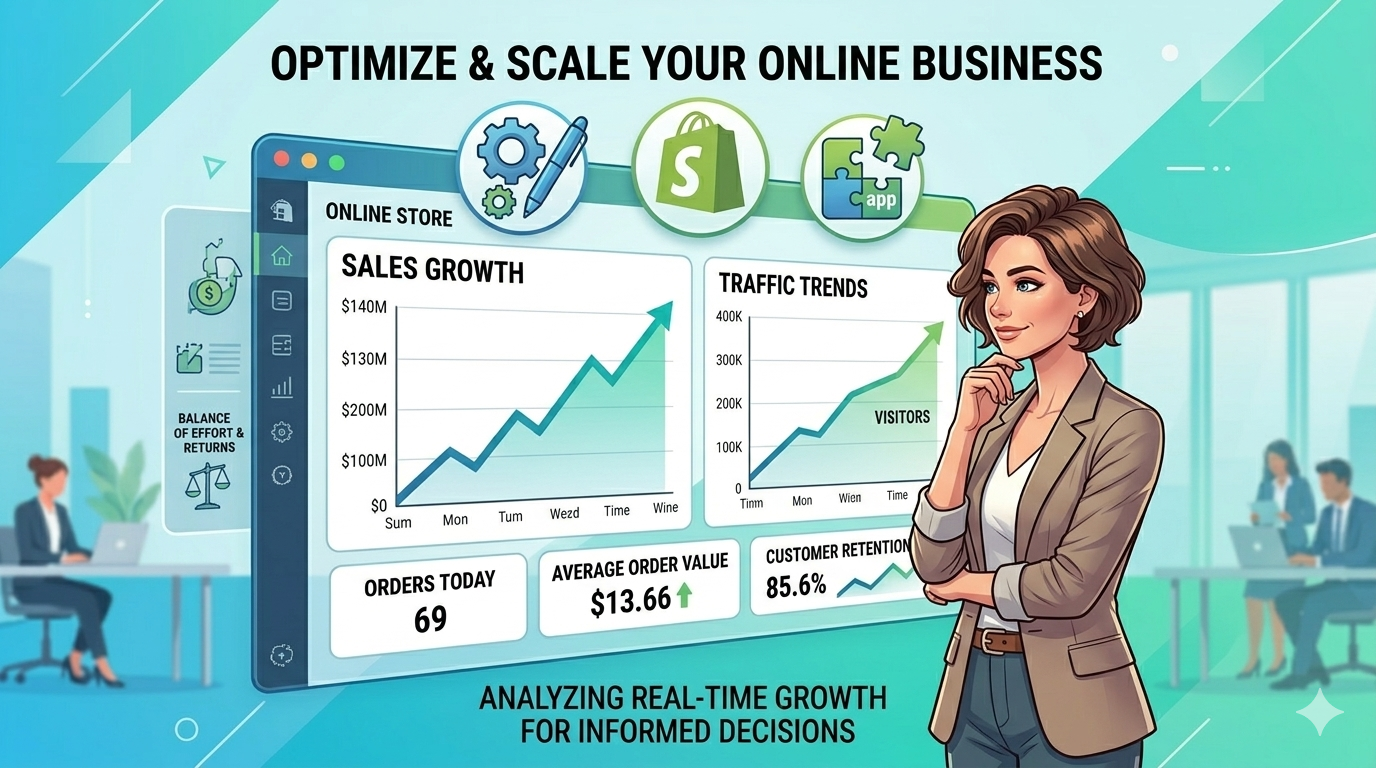 For many product-based brands, a clear Shopify dashboard and steady sales growth are all they need from day one.
How Work Dynamix Helps You Choose and Build
You do not need to answer the WordPress vs Shopify question alone. Making the wrong decision can lead to expensive redesigns and lost time. Therefore, it is wise to evaluate your options with an experienced website development team.
At Work Dynamix, we:
- Analyse your business model, products, and content strategy.
- Recommend the right platform: WordPress vs Shopify or a custom stack with React, Next.js, Node, and PHP.
- Design and develop websites that focus on speed, security, and conversions.
- Offer hosting, domain, and ongoing maintenance, so you are never stuck with technical issues.
Complete Website Development Services – Work Dynamix
Hosting, Domain, and Maintenance Packages – Work Dynamix
Conclusion: WordPress vs Shopify – What Should You Choose?
In conclusion, the right answer in the WordPress vs Shopify debate depends on your business goals, resources, and growth plans. Both platforms are strong, but they serve different needs.
- Choose WordPress if you need maximum flexibility, deep SEO control, and a content-driven website that can evolve with your business.
- Choose Shopify if you want a streamlined, hosted eCommerce solution that lets you focus on selling products with minimal technical complexity.
If you want a tailored recommendation instead of guessing, we are here to help. Work Dynamix can review your situation and propose a clear, practical plan for your next website.
Ready to decide between WordPress vs Shopify and build a website that actually grows your business?
Contact Work Dynamix today to discuss your project and get a complete website development roadmap.